As you’d know, I’ve been trying to get some sense out of the mining safety regulator, Resources Safety and Health Queensland, RSHQ. I have to admit that I didn’t understand the “role” of RSHQ when I was trying to get a meaningful answer out of them about safety issues. An example of an email I sent to the RSHQ (chief hygienist) appears below:
— start email to RSHQ ——-
I am aware that you have been away and have a lot of catching up to do including wading through many emails.
When you get to this one, I would ask you to give it some priority because it discusses a grave failure in your organization’s lead biohazard safety processes, as outlined in the email below this one. The repercussions could be unfortunate for your organization..
A failure to recognize that lead accumulates in lead workers bodies and can have serious consequences in later life for those workers, has major ramifications.
A lead worker female of child-bearing age can accumulate a significant body lead burden, and if she has a child, years after leaving lead risk work, lead from her bones will be passed to the foetus. If she breastfeeds, that lead will be passed to her child in her milk. That can cause devastating harm to the child in terms of developmental damage, learning difficulties and behavioural problems.
There was a recent case, Sanders vs Glencore (Mt Isa Mines) that involved a child affected by non-occupational lead exposure in Mt Isa. If a female lead worker were to prosecute a similar case on behalf of her child, Glencore and RSHQ as the regulator responsible for the lead biohazard safety protocols, would undoubtedly be found at fault.
Lead also has significant neurological effects on adults, including intellectual impairment, reduced decision-making ability and a tendency to violence. This can manifest in many ways including violent crime, and perhaps even domestic crime.
That is the legacy that lead workers carry from their time working in a lead risk environment. They carry that legacy because the safety protocols set up to allow them to work safely were not only inadequate, they failed to recognize the bioaccumulation of lead.
The safety regulations that should have kept them relatively safe, failed them. That’s why I’ve contacted you, in part to forewarn you..
I may be over-estimating the effect this news will have on lead workers, although my blog https://leadtox.blog is certainly attempting to keep them informed.
At the point where the news media become aware of this situation, it could become extremely awkward for all parties responsible. I don’t think that would be the best outcome in terms of solving this problem, so I urge you to communicate with me, involve Glencore and seek a sensible path to avoid notoriety.
—————
I thought that was pretty blunt really. Regardless of their level of responsibility, surely there would be some reaction to a suggestion that RSHQ might not be doing their job. After all, their logo is
Zero serious harm obviously means something else to me than the people in the organization that came up with a snappy logo. I wonder if they appreciate the joke the way I do. It obviously doesn’t mean zero harm to workers, because they’re prepared to ignore serious harm to workers and in the case of female workers, even to their children.
If RSHQ were at all serious about zero serious harm, I wouldn’t be writing this blog.
I guess my worst case expectation was something like (this require a small quotient of giving a damn):
We recognize there appears to be a problem with the biohazard monitoring and management, but our regulations are based on the model from Safe Work Australia, and we are not in a position to change the regulations within that framework. However, we have forwarded your information to SWA together with your details for their consideration.
Please be assured that’s not what happened. Instead, I received the following reply from the Chief Inspector:
Under Queensland Legislation, mines are required to ensure a safety and health management system is in place which ensures the level of risk to persons is at an acceptable level. Site senior executives must also ensure that persons carrying out work at a mine are fit for work and carry out relevant health surveillance measures including a medical from an appropriate doctor when a person first joins or re-joins industry and periodically (not more than five years) while they are a worker.
I realise RSHQ’s job is the enforcement of regulations, not the modification of regulations, but this reply shows a pretty severe case of tunnel vision or a lack of imagination, particularly in the face of my comments in the email about legal consequences. Then again, I may just be unrealistic in my expectations.
Think about what I said in the email to RSHQ, about accumulated lead being passed from mother to child, and what that means. I’d better spend some more time talking about what lead that’s stored in the bones does to people in the long run, and what it does to children.
In the midst of all the bad things that lead “could” do to you, remember one thing., lead can be removed from the body. That won’t necessarily reverse any damage already done, but it will stop things getting worse, and removing lead can make things a lot better, especially some of the neurological effects.
It should absolutely be possible to work in a lead risk environment and still be safe from the toxic effects of lead. It should absolutely be possible to safely have and raise children in that scenario. If only the people that could make things safe stopped covering their butts and did something.
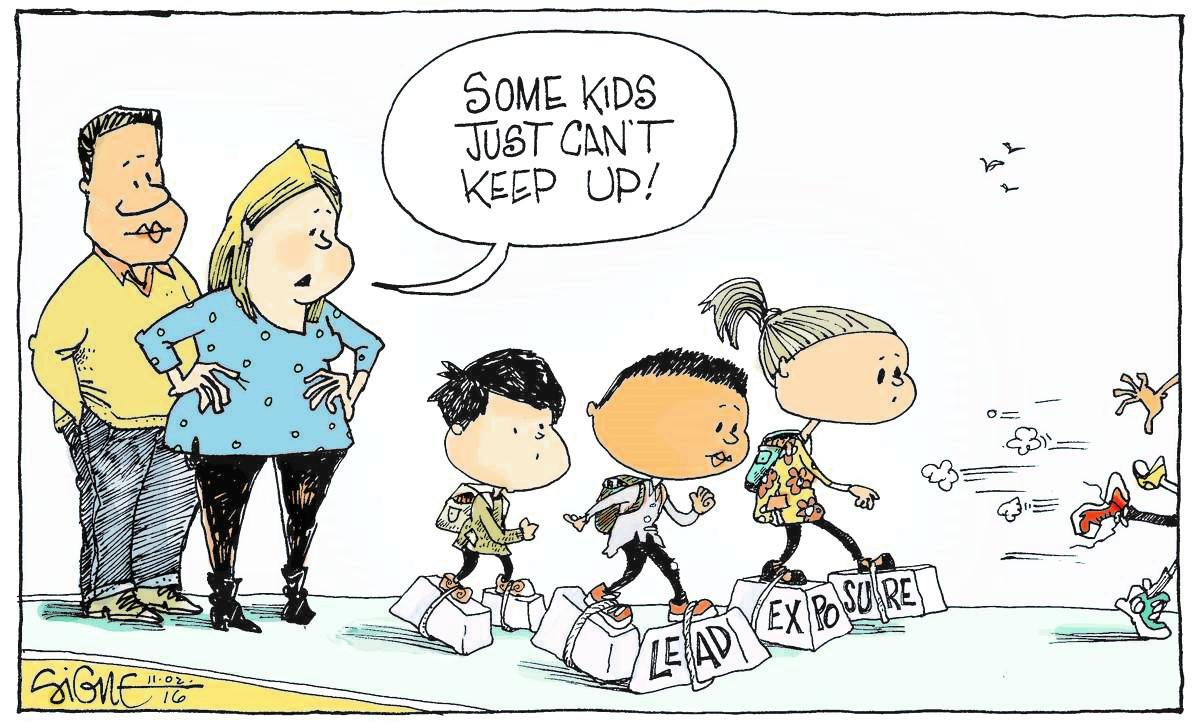
But it rather looks like RSHQ limit their interest to their regulations, and even there, there are failures. Think about the cartoon below if you disagree.
 Lead in Australia - what you didn't know