I took the time to go through a 2016 Safe Work Australia (SWA) document which described the decision and consultation process that went into changing existing workplace health and safety rules.
After a lot of reading, I found things weren’t nearly as bad as I’ve previously stated, and in some instances they were worse.
Having read quite a few of the US Occupational Health and Safety (OHSA) documents, I now have a much better understanding that the OHSA regulations form the foundation of SWA model regulations referring to lead.
The SWA consultation process is much more comprehensive than I had thought. It involves proposing several different incremental change options, together with a cost/benefit analysis of the results of the proposed options.
Provided the cost/benefit analysis is acceptable to a majority of employers, a progressive (enhanced safety) change may be rolled out, generally with 2-4 years for implementation.
That sounds a lot better than my earlier claims that employers could effectively veto changes, but it does basically amount to the same thing. What I had failed to understand is that the number of WHS claims, and their value is also used when considering the viability of regulation change options.
One thing that was made clear is that the SWA model regulations weren’t absolute. That is, if an employer wanted to implement more stringent safety procedures, they were free to do so. The SWA model regulations are not a straitjacket, they’re a guide for minimum acceptable standards. That said, the more progressive and safety conscious employers didn’t include companies like Glencore who is the biggest lead risk employer in Australia.
But the main stumbling block is still the use of blood lead levels (BLL) as decision points in dealing with safety issues. One of the 2016 option tradeoffs was that if lower BLL levels were accepted, then the frequency of blood lead testing could be reduced.
I’d like to take this opportunity to explain why less frequent BLL testing makes using BLL even more pointless.
I came across an interesting quote: “Due to the short half-life of lead in the bloodstream, BLL cannot be used to diagnose or rule out evidence of exposure that occurred more than six weeks prior to testing.” (Philip AT, Gerson B. Lead poisoning – Part II. Effects and assay. Clin Lab Med 1994 Sep;14(3):651-70,).
Why does this matter? What it basically implies is that unless you are measuring BLL at no more than monthly intervals, you can’t be sure of what you’re measuring when it comes to lead exposure. Lead accumulates in the body, in the bones, and the existing lead in your bones contributes to whatever lead is in your circulation due to exposure. BLL, as is used in the occupational sense to make decisions about safety, simply doesn’t measure up as any sort of indicator.
This in turn is directly proportional to whole blood concentrations. Blood lead (PbB) concentrations have been the traditional measurement of internal exposures to lead and indicators for management actions for persons overexposed to lead in the workplace.
Blood lead is a measure of the amount of lead in whole blood, red blood cells and plasma. Red blood cells bind lead and in acute lead exposure represent up to 98% of the lead in the blood. Plasma lead only makes up about 2%.
However this picture changes markedly when exposure has been chronic. In that scenario, the proportion of blood lead in plasma is much higher, largely due to the release of accumulated lead from bone. This means we have 2 significant pools of lead in blood; lead in red blood cells which fluctuates up and down depending on current exposure and breakdown of red blood cells, and reasonably constant but ever-increasing contribution of lead that has been accumulated in the bones.
Are you willing to guess what is actually being measured?
While things are obviously not terribly precise in any which way, you’d think the outcome of overwhelming evidence to the contrary was force some change.
The problem is that changes in Australian WHS rules relating to lead are infrequent (5-10 years) and there appears to be no urgent moves to update the model regulations to implement something like XRF to accurately monitor health risk and using chelation for prophylaxis lead lead exposure risk management..
“Proper” environmental monitoring of lead dust and fumes in the workplace could replace BLL with something far more accurate and timely. The only things environmental monitoring couldn’t do is manage scenarios such as taking off dust masks because the ambient temperature is 50+ degrees, or too crowded or too dirty change rooms, but it would provide a far better indication of excess exposure.
Then again, if dust mask filters were analysed for lead content, that could achieve two things, personal environmental monitoring, and detection of non-compliance in wearing PPE.
Then again even if accurate monitoring of exposure were possible, we’re still left with the problem that unless lead exposure can be reduced to nothing, workers will still accumulate lead in their bodies.
But if you can stop lead being absorbed and remove existing lead from a lead risk workers body, lead ceases to be the long-term danger that it was. Chelation is used as a last resort treatment in the face of dangerously high blood lead levels. That requires an IV infusion of chelating agent, a proper clinic environment, nurses etc.
Oral chelation could be a game changer, because it requires no or minimal medical supervision, is inexpensive and safe. It was first used in the early 1960s to effectively slow lead uptakes and remove lead from the body. However it had two drawbacks, it “interfered” with the moniotring of lead exposure and was used by some unscrupulous employers as a way to avoid having to clean up the working environment to reduce lead exposure. As a result the US OHSA saw chelation not as a way to protect worker’s health, but an intolerable nuisance which interfered in the management of lead exposure. “Safety” has to be able to be monitored and quantified regardless of a worker’s health outcomes.
An oral chelator for lead has to be reasonably specific for lead, freely available without prescription, and safe over a wide range of dosages. The calcium disodium salt of ethylene diamine tetra acetic acid (EDTA) fits these criteria. It’s a registered food additive, (#385) which works by preventing oxidative (metal catalyzed) damage of food stuffs, something it does quite well in the body as well. There is no regulatory barrier to it’s use in food, as an example provided the maximum daily dose is 2.5mg/kg body weight which is based on a 100-fold safety margin.
Considering all the detrimental effects of even low levels of lead in the body, chelation seems like a no brainer, except that EDTA has somehow managed to gain a bad reputation in medical circles in the western world.
The most common comments are: chelation is dangerous and can cause death and renal damage, and chelation was responsible for the death of a 5-year-old child. These comments are true for IV Sodium EDTA infusion at high dose and duration, something that hasn’t happened for the last 40 years once safe treatment protocols were established. The 5-year-old child died from the IV infusion of the wrong form of EDTA supplied due to a pharmacy error. Disodium EDTA was supplied despite calcium disodium EDTA being requested. Disodium EDTA can cause hypocalcemia, calcium disodium EDTA can’t. The child died of hypocalcemia.
If WHS procedures were truly interested in worker safety, then monitoring lead accumulation in the body, and managing lead accumulation (and removal) with oral calcium disodium EDTA would deliver the desired result, safe workers unaffected by lead exposure, particularly if this was combined with environmental monitoring to reduce lead exposure. But WHS isn’t about ensuring worker safety when it comes to protecting them from the multitude of health issues resulting from excess lead accumulation.
That has to change.
While XRF spectrometers for diagnostic use are quite expensive, so is the amount of money paid out in claims, and claims settled out of court (with NDAs). Oral chelator sufficient to stop lead accumulation in the body and gain net removal of lead would cost under 10 cents a day. That’s the cost of keeping lead risk workers healthy.
Exposure to lead can have devastating effects on young children, and have serious long-term effects on older children and adults.
But that no longer needs to be the case.
We have the technology to assess risk and the efficacy of protective measures that has been available and in use for over 30 years. Well tolerated oral chelating agents, in use for over 60 years, can minimize the absorption of lead and remove lead that has been absorbed in the body. Industrial chelators can be used to decontaminate, or more correctly passivate lead in the environment.
So why aren’t we doing something right now?
We can’t move forward until there are some pretty fundamental changes at multiple levels. A variety of workplace health and safety (WHS) organizations, state and federal are uninterested in any sort of change. Lead risk employers don’t want to open a Pandora’s box of issues related to their failure to protect workers, and simply pass the buck to the WHS regulators.
Queensland Health seems to have a policy of “we’re doing good work in Mount Isa” and pretty much ignore the effects of lead elsewhere in the state. The true state of affairs is probably worse since Queensland Health has consistently failed to pursue lead safety issues for the last 12 years. Treatment is mostly restricted to severe lead poisoning in children and nothing is done except the occasional environmental auditing for subclinical lead poisoning.
But if the sole focus is on Mount Isa, what has happened there in the last decade or so?
A short summary would be that Aboriginal health workers were concerned about the ineffectiveness of measures dealing with lead exposure of aboriginal children in Mt Isa.
When Robbie Katter, local MP and head of the Lead Alliance which “manages lead safety” in Mount Isa, was asked about the situation he is quoted as saying:
“We’re the stakeholders, we’re the ones affected by it,” he said.
“The only conclusion you can draw from [questions about lead] is people saying we’re so ignorant here we don’t know there’s a problem, or secondly we don’t care about our kids’ welfare or thirdly we care more about money than we do our kids’ health.”
We know what the risks are and that there isn’t a problem there.”
That pretty much sums up the perceived situation in Mount Isa, that there isn’t a problem.
I really wish that was true.
Protecting the economic life of Mount Isa by downplaying the health risks from the mine and smelter was historically an understandable strategy. But protectionism of that sort is pretty toxic when newcomers to Mount Isa express concern about the effects of lead on their children. University and ABC News interviews of Mount Isa residents showed quite clearly that if you want to have a quiet life in Mount Isa, then lead safety isn’t a topic of dicussion.
Ignoring a problem for long enough that it becomes someone else’s problem is a favorite commercial and political strategy. But it doesn’t make the problem go away, it just leaves it for the next generation.
If lead can be prevented from being absorbed, if already absorbed lead can be removed, it ceases to be a problem.
I’d like to repeat something I’ve covered before in a bit more detail to put this comment into perspective.
There is a huge area in far north Queensland, a rough triangle with it’s tip on Mount Isa, and it’s base on both sides of the Gulf of Carpentaria, where there is a lot of lead in the ground. Anything that grows on that land is exposed to lead, including plants, animals and people. That’s got nothing to do with mining or smelting activities because lead exposure is ubiquitous.
Interesting enough, the far north Queensland graziers are far mosr realistic than the people of Mount Isa. The story is worth retelling.
Australia had a thriving live export trade of cattle to Indonesia, shipped out of Darwin. Over a decade ago, Indonesia found that the cattle had levels of lead that made them unfit for human consumption, and that halted imports.
The solution for that problem turned out to be fairly simple. Cattle were kept in a feedlot for several weeks and fed an industrial chelator (TMT) that removed lead from their bodies. This wasn’t a cheap solution from the viewpoint of the cost of testing and agistment costs, but it resulted in cattle that were fit for human consumption and sale.
It obviously occurred to some of the graziers that if their cattle living on the land had a lot of lead on board, then it was likely that they were absorbing lead as well. While medical opinion in Queensland largely ignores the risk of lead, or states any deleterious effects are permanent, the graziers KNEW that lead could be removed from cattle.
They treated their vegetable gardens and yards near the station house with TMT, which has not only been shown to decontaminate the soil so vegetables contain no lead, but TMT also stimulates plant growth, something that has recently been patented.
As far as the cattle are concerned, a different approach to preventing lead absorption is based on trace metal augmentation in Western Australia. If cattle are provided with salt licks with added low levels of lead chelator and sugar (cattle love the sweetness) it’s likely that they will no longer absorb enough lead from their environment for it to be a problem.
Doing nothing and ignoring the problem of lead in the environment wasn’t an option for the graziers so they’re exploring solutions to make living with lead safe, both in terms of health and income,
I really need to stress, again and again, that it is the absorption and accumulation of lead in the body, in the bones, that comprises the health risk from lead. If lead absorption can be blocked, if lead already in the body can be safely removed, lead ceases to be a health risk.
That’s pretty simple really. But let’s see what else can be done,
A 6-month double blind trial was carried out in Morocco in 2016 with Swiss funding, to test the effectiveness of iron supplementation and lead removal on children’s cognitive abilities. The trial found that iron in combination with EDTA (in the form of ferric disodium EDTA) produced a net decrease of 30% in BLL (blood lead level) at the end of the trial. The authors concluded “Our findings suggest that NaFeEDTA should be the iron fortificant of choice in lead-exposed populations”
Several points have to be made about this trial. The children continued to be exposed to lead but still showed a decrease in BLL, indicating a net reduction in body lead burden. The still relatively high endpoint BLL may be due to raised bone lead levels due to chronic lead exposure.
While no cognitive test improvements were seen, the BLL endpoint achieved was still at a level where there is cognitive decline. Unless the BLL endpoint is below 1ug/dL, it is likely that cognitive or behavioural improvement will not be achieved.
Nevertheless, treating both conditions (iron deficiency and lead poisoning) together recognises that they are often seen together because lead suppresses iron absorption and haem production, and iron deficiency causes Pica, a condition where children will eat more lead-contaminated dirt.
As far as safety goes, ferric EDTA has been used as a paediatric iron fortificant in France for over 50 years, it has also been endorsed by the WHO as an iron fortificant. It is also registered as a food additive in Australia.
Surely the children of Queensland deserve better, whether they live in Mount Isa, in the lead-rich areas north of Mount Isa, or in the many older houses covered in lead paint. I should also mention Townsville, Queensland’s other lead city, and all the people living near the railway right-of-way between Mount Isa and Townsville, and near major roads where house and land were contaminated with lead from leaded petrol.
Regardless of where the lead comes from, we can now prevent the health risk, if the will exists to do something.
I’d better start with a disclaimer insofar as these blogs are a living document. As I get new information, or gain a new insight, that will hopefully be reflected in amendments to my commentary. There are a lot of blog posts below this one if you continue to scroll down. Please read them if you have time.
This blog represents a journey of discovery where I first found out about all the effects of lead, showed my disgust at the fact the dangers of lead weren’t being treated seriously, and have finally come to the conclusion that we can do something to protect children and adults from long term harm from lead, that the only thing missing is the will of the authorities to do something.
Life isn’t that simple, but that’s my aim: to educate people that lead exposure is dangerous and harmful in the long term because it is cumulative, and that we can do something to stop the harm.
But that’s not where we are at the moment.
When news of elevated blood lead levels are seen in the News media, it is almost always about lead exposure to the youngest members of our community. Children aged 2 and under tend to suffer the most devastating and potentially permanent consequences of lead poisoning. While it is wholly appropriate and necessary for resources to be designated to reducing the harmful impact of lead in children, the impact of lead on older adults should not be ignored.
But what if the harmful effects of lead exposure on children are being ignored as well?
When I first started this blog, I assumed, somewhat naively, that the many failures in workplace health and safety (WHS), lead exposure monitoring and treatment for lead poisoning following lead exposure were due to ignorance. After all, what else would explain why the WHS regulations have remained fundamentally unchanged for nearly 50 years, despite the avalanche of clinical and epidemiological data that has become public knowledge since then. Inertia and unwillingness to change would surely not have held back advances that proved the basic assumptions that are the foundation of our WHS efforts pertaining to lead risk management were absolutely wrong.
Surely organizations (Resources Safety and Health Queensland, Safe Work Australia) with progressive mantras like “Our vision is for a zero serious harm resource sector in Queensland” would make an attempt to provide a true zero risk work environment for lead risk workers.
Nope. Safe Work Australia is hamstrung by legislation that means employers can effectively veto any progressive changes, while Resources Safety and Health are quite happy to hide behind the decades-old regulations that means workers exposed to lead will be harmed, and NOT be safe. The employers, firms like Glencore, are of course in compliance with the dated regulations. In many other contexts, the failure to act to protect workers would be labelled criminal negligence.
If we go away from WHS issues and concentrate on the general population, things appear better, but not that much.
I’ve tried to make this point multiple time, but it bears repeating. Everyone in our society has been exposed to lead, and the only question is how much they’ve accumulated up to now. Most of the lead that has ever been absorbed into your body is still there, mostly in your bones, and it is having a detrimental effect on your health.
I think I need to go back in time to provide the evidence for that statement.
The fact that lead was stored in the bones was common knowledge more than 80 years ago. Tissue specimens had been taken from the cadavers of lead workers and were analysed for lead content. The tissues with the greatest amount of lead were the bones, the brain, and the aorta.
Lead is handles like calcium in the body, and the brain has a high concentration of sulfur proteins and enzymes, but what is lead doing in the aorta?
Clinical studies have consistently demonstrated that lead exposure is associated with a negative impact on a range of health issues involving the heart, kidneys and brain. A number of large-scale epidemiological studies have indicated a strong link between elevated blood lead levels in adults and premature death from cardiovascular disease.
Monash University studies of a large number of Australian lead risk workers has shown higher death rates and much higher risks of cancer, particularly esophageal cancer. The US Veteran’s Administration has a large number of VA-sponsored studies of military veterans that show quite conclusively that as body lead levels increase, so do cardiovascular deaths.
The magnitude of the problem in Australia can be estimated if figures released by the US CDC are applied to the Australian population. It is possible that 35,000-40,000 Australian adults die prematurely each year from lead comorbidities, due to lead exposure over their lifetimes. This number of deaths is 10 times the deaths due to asbestos exposure.
Older adults who have lived in homes built before the mid-1970s for much of their adult life have been exposed to lead throughout their lifetimes due to the presence of lead paint in their homes. Houses and yards near major roadways are still heavily contaminated with lead as a result of the use of leaded petrol for nearly 70 years. Some of our food and water contains significant amounts of lead.
It is crucial to understand that we continue to accumulate more and more lead in our bones as we age. Most of it never leaves our bodies. As the total amount of lead in our bones and bodies increases, so do the ill effects of lead in our bodies.
A longitudinal study compared cognitive test results of men with both high bone lead levels and no bone lead levels. Men with higher levels of lead in their bones showed cognitive declines comparable to aging an extra five years. Participants of this study had not encountered occupational exposure to lead, causing researchers to conclude the lead exposure was community based, likely in their own homes, over the course of their adult lives.
In addition, researchers found that adults age 44 and older with only slightly raised blood lead levels (6.7 µg/dL as compared to the current actionable “limit” of >5ug/dL) had a 37 percent greater risk of death from any cause and 70 percent greater risk of death from cardiovascular disease than those without similarly elevated blood levels. Cardiovascular disease contributed to by lead exposure includes peripheral vascular disease and atherosclerosis.
Since testing for lead levels is not standard practice in Australia, no useable data is currently available to estimate the impact of lead exposure on older adults. 2016 Medicare data indicates that less than 1 in 2000 Australians had blood lead tests, a lower rate than in the year 2000. This data didn’t include workers exposed to occupational lead.
Physicians may also be unlikely to consider testing for elevated lead levels because many of the symptoms of lead poisoning are closely related to other conditions commonly seen in the aging population such as joint and muscle pain, high blood pressure, difficulties with memory or concentration and mood disorders.
This raises the interesting question that considering it is likely every single adult in Australia has been exposed to varying amounts of lead due to the legacy of lead paint and leaded petrol, plus lead in our food and water, how much of the ill effects of aging are actually due to accumulated lead exposure.
The only way to exclude the possibility that lead might be the cause of a disease state, is to test for the presence of significant amount of lead in the body. This is particularly true in the not uncommon scenario of lead being released from the bones by osteoporosis, cancer or inflammatory conditions and this can lead to dementia-like symptoms, due to raised blood lead levels rather than brain damage.
Is it acceptable that we should continue to ignore exposure to lead as a factor in our health as we age? The likely cost of ignoring lead exposure as a possible factor in a range of disease states is likely to be massive, so what are our various health departments doing?
Nothing much it seems. The only minimal acknowledgement of outcomes of lead exposure in children are pretty much limited to the 3 lead cities, Port Pirie, Broken Hill and Mount Isa. This ignores the fact that there are somewhat more than 4 million older houses in Australia, where both children and adults are or have been exposed to significant amounts of lead,
And yet, if you look for the potential causes of cardiovascular disease in adults, there is no mention of lead and its possible contribution to atherosclerosis or high blood pressure, but a lot on cholesterol levels and treatment with statins. Is the medical profession so heavily influenced by the large pharmaceutical companies that anything that doesn’t generate money for big pharma is ignored. Are they ignorant or do they simply not care about the effects of lead.
I’ve mentioned before that cattle in far North Queensland that are raised on lead-rich grazing land have high body (carcass) lead levels. That proved to be a financial problem for graziers because their customers (Indonesia) wouldn’t accept cattle that they deemed unfit for consumption because of high body lead levels. For the last 12 years, the cattle have had the lead removed so they were fit for consumption, but humans severely affected by lead exposure continue to die, untreated by our health services.
Where have we gone wrong? Why do we tolerate this scenario and why is there no apparent duty of care in the people we’ve trusted to keep us safe?
I hope this blog might be read by someone outside Queensland, so I’d better explain that Queensland is on the northeast corner of Australia, with climate ranging from temperate to tropical depending on the time of year.
Most of the population of Queensland is near the coast or fairly close, whereas further inland you generally see smaller cities or towns that are dependent on local agriculture or mining.
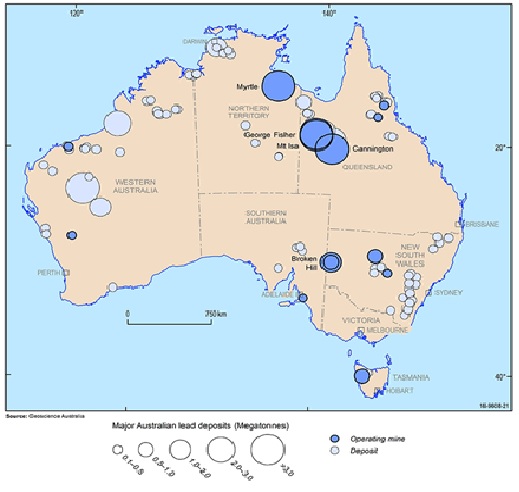
The map below shows the location of lead deposits or mines in Australia. You’ll notice that Queensland has quite a bit of lead. in the north west corner. The main lead mining and smelting city of Mount Isa, about 900 km from the coast. Mt Isa has been mining and smelting lead ore for over 90 years, and sends lead ingots and lead concentrate by train to Townsville on the coast. About 110,000 tonnes per annum of lead concentrate are shipped to Townsville, to be loaded at the Glencore Port operations. Lead concentrate was formerly shipped in uncovered wagons, leading to extensive lead contamination along the railway.
Historical contamination from lead concentrate loading operations into bulk carrier ships has led to most of the areas near the port being contaminated with lead concentrate, including children’s playgrounds. The air monitoring at the Coast Guard station opposite the port loading facilities shows lead concentrate dust peaks when bulk carrier ships are being loaded. The peaks exceed allowable limits, but our excuse for an EPA averages the total release per 24 hours, which effectively suggests there is nothing wrong.
Mt Isa is probably the only place in Queensland where the Queensland Health department makes any real effort to be appearing to deal with issues arising from lead exposure. That pretty much means that lead exposure is ignored in the rest of Queensland, including Townsville which is at least in part a “lead city”.
The focus on Mt Isa would be understandable from the viewpoint that Mount Isa has high concentrations of environmental lead, not only because the city is sited on the edge of a lead ore deposit and suffers lead dust from the mining, but there is also a contribution from the lead smelter which has one of the tallest smokestacks in the southern hemisphere, in the hopes the fumes will go far enough away to not be a problem to Mt Isa residents.
Queensland DPI carried out soil analysis near Mt Isa which indicated lead recent lead pollution many kilometers away from Mt Isa. They did this by measuuring the lead content of soil samples taken at different depths which quite clearly indicated much higher surface lead levels, most likely due to smelter emissions.
Mount Isa is an interesting place from the viewpoint that people have been ignoring lead for so long, presumably to protect the local economy, that it’s very hard to find anyone who has lived in Mount Isa for a few years who is willing to admit lead could be a problem. If you do start asking questions about lead, you quickly get unpopular with your neighbors.
The other lead cities (Broken Hill, mining, Port Pirie, smelting) are now quite active in trying to reduce lead exposure in children by continually monitoring blood lead levels in children as an indicator of the success of their efforts. While there are free walk-in blood lead testing,, there is NO official wide-scale testing of children for lead exposure aside from opportunistic testing for lead in left-over paediatric blood samples in the local hospital,. There hasn’t been a concerted effort to get a large sampling of childrens blood lead levels for over a decade.
There are Australia-wide programs run by Monash University and the Victorian EPA, where people can send in soil or dust samples for lead testing. Would it surprise you to learn that while Port Pirie and Broken Hill are well represented, Mount Isa isn’t? It appears not one member of the public in Mount Isa has sent in a dust or soil sample for toxic metal testing.
Up to this point I’ve concemtrated on the results of the mining and smelting operations, and the transport of lead concentrate.
However, there are much bigger lead problems in Queensland. The first is legacy lead contamination from leaded petrol along major roads and highways. That has resulted in the surface soil near the roadways being contaminated with lead, often well above allowable limits. There are many places where growing your own vegetables can be a health hazard because of lead.
A much more widespread problem is lead paint on older (pre-1970) houses which number in the tens of thousands (possibly as many as half a million) all over Queensland. Regardless of whether the houses have been maintained or not, you either have direct exposure to lead paint, which is very attractive to children because of the very sweet-tasting lead acetate added as a hardener, or if the houses have been repainted, particularly after flooding, the areas around the houses will be heavily contaminated with lead paint dust or chips.
Queensland has had a long history of dealing with lead poisoning from lead paint. Queensland physicians published many of the early scientific and clinical papers about child lead poisoning from lead paint.
And then things started to go a bit off course. Maybe it was the influence of the Lead cartel active in the 1930s, or the proponents of leaded petrol or lobbying by mining interests, but whatever the reason, the public awareness of the dangers of lead paint started waning. Something went terribly wrong at the beginning of this century, when there appears to almost have been a concerted effort to minimise information about the dangers of lead paint or perhaps lead as a whole.
Queensland Health are obviously aware of the dangers of lead, as for example in one of their public statements:
This analysis indicates that the public health focus for elevated blood lead levels should be to make the general public aware of the dangers of lead exposure whilst renovating old homes and the precautions they should take in this circumstance. In particular, measures should be adopted to prevent children from ingesting paint or other lead-based materials whilst renovation is occurring.
And yet, after the 2011 floods in Brisbane and Ipswich, where many older homes were flooded, there were public warnings from the Health Department about asbestos and contaminated water, but no mention of lead.
When questioned, their response was:
Queensland Health’s post-flood focus was on the issue of asbestos debris and contaminated water problems as these were the issues of key public health concern. Information for the public in relation to dealing with lead in paint during home renovation and restoration work was already available and accessible to renovators and contractors.
Just because they didn’t mention the hazards resulting from lead paint doesn’t mean they didn’t have information available, if you knew where to look, if you had an inkling that removing lead paint was dangerous. I
If people were concerned about lead exposure, they had to ask their doctor for a blood lead test, or demand a blood lead test from their pediatrician for their children. Surely if lead was identified as a danger, that should have involved some sort of public health directive to screen for lead poisoning?
From Queensland Health’s own data (2016), painters are one of the largest group of individuals with actionable blood lead levels. If painters are affected, what about the occupants and children living in the houses that were renovated? Why weren’t those children and adults tested for excess lead exposure?
But there is worse to come. Despite the fact that Queensland Health have a publicly stated intervention protocol, that protocol is most often only applied to children in Mt Isa. It appears while Queensland Health is anxious to appear to be doing “something” in Mt Isa, they are largely ignoring their responsibilities in the rest of Queensland. If an infant with a blood lead level of 22ug/dl due to house renovation fails to receive any intervention, then it could be reasonable to speculate that there is a lack of priority in dealing with lead exposure.
I’ve already pointed out that Queensland Health are no longer releasing updates on the number of actionable lead event in Queensland since 2016, or that they deal with questions from the public about lead by restricting communication and then blocking it.
What went wrong?
Are they so ashamed of their failures that keeping quiet about lead is the only way to avoid the public repercussions?
I would recommend downloading and reading a document released because of a FOI request from ABC News, DOH-DL 17/18-048 (2017/18 Disclosure Log (health.qld.gov.au)). It gives a useful insight into how Queensland Health spins it’s efforts so it appears to be doing it’s job. Quotes in the document also emphasize the importance of dealing with the issues of public housing painted with lead paint in Mt Isa.
It’s probably also worth mentioning the role of media advisers in what I see as a disgraceful debacle.
My frustration with getting any useful information out of Queensland Health finally caused me to lodge a complaint with the Queensland Health Onmudsman. The complaint had two parts, apparent lack of action in effectively dealing with paediatric lead exposure in Queensland and Queensland Health’s quite obvious unwillingmess to engage to address the child health issues.
I got a reply which was unexpected, because I thought the latter issue was due to an “unofficial” Queensland Health policy. I was wrong, because the reply I got from the Health Ombudsman was:
‘The concerns raised relate to a government policy and do not relate to a health service provided to you or to a health service provider, and as such it does not constitute a health service complaint within the meaning of sections 7 and 31 of the Health Ombudsman Act 2013.’
As I said, this answer was unexpected because it possibly suggests that non-communication about lead-related issues is an official government policy.
So here we are.
We have laws about asbestos, or silicosis from manufactured stone, but next to nothing about lead. There are plenty of watered down warnings, but no public recognition that lead is dangerous. If an individual was sufficiently concerned to try and access the Australian standard for the safe removal of lead paint, they would find the standard is behind a paywall, and costs $165 to download.
How could this have happened? How can “responsible” adults ignore a scenario that is possibly harming many children in Queensland without doing anything?
There are many reasons, not the least being lobbying by lead-industry interests, and in the past, when we lacked the means to treat the results of lead exposure ignoring the problem at least had an economic justification, because the only solution to the problem was shutting down the lead industry. But we now have the means to non-invasively detect lead exposure, and to be able to reduce or reverse some of the effects of lead exposure in children. But we still do nothing.
“Lead is deceiving – hidden in sweet-tasting paint and plaster on the very walls of homes”
I’ve talked about lead paint before, but mostly as part of the complete picture of lead hazards. In a lot of ways, lead paint is the most serious lead hazard faced by all Queenslanders.
Lead paint is an industrial poison where the risks were denied by parts of the scientific community, with concerted attempts made to hide the truth. Dealing with this potent poison effectively should have been done by now, but short-lived public outcries, failed prevention campaigns, and regulations that were promoted but never implemented have ensured it is still a very real and present hazard. Our public authorities have endorsed lead paint by their inaction.
I’ve also talked about lead risk workers, and while their government-ordained lead risk management is a travesty and disgrace, they at least have some idea of the dangers involved in working with lead.
Many people renovating older houses have little appreciation of the truly grave dangers involved in sanding lead painted surfaces. That comment about most people being ignorant of the dangers of lead includes most professional painters because no one enforces the safety standards around how to handle lead paint. There are safety standards, but they aren’t compulsory.
I’d like to quote some sections out of the “Lead Paint Hazards” page on the Painters Institute web site (Australian Lead Paint Hazards and Risks (painters.edu.au)). The Painting Institute comments will be in italics, with bolding and comments added by me.
Lead paint is common in Australian buildings built before 1971.
To protect yourself and your family, always choose a qualified painter trained in lead paint management. Find a lead paint qualified painter (https://www.painters.edu.au/Flnd-A-Painter.htm)
This of course assumes you know you might have lead paint on your house, you’ve bought a lead test paint at Bunnings, and have found that lead paint is present, or perhaps the painter is one of the few who is lead paint aware. It also assumes you’re willing to pay 2-3 times as much for a safe lead paint removal job.
The discovery linking lead paint with health issues was actually made in the 1930’s by a doctor in Queensland, but paint containing signicant quantities of lead was manufactured in most states of Australia up until the late 1960’s. Concern over the consequences of the use of lead in paint caused Queensland to ban its use in 1922 and other states to reduce its presence from 1950. National legislation was introduced in 1969 to restrict lead content.
From 1970 onwards, lead content was reduced to below l%. Current paints generally include much lower lead content (0.1% since December 1997) or are even lead free.
It may be assumed therefore that buildings constructed after 1970 will not exhibit high lead levels. This would be quite incorrect Even in Queensland, where legislation was enacted at an early date, any buildings more than 20 years old should be considered suspect, particularly if old, industrial or marine paints have been used. Industrial protective coatings’ frequently are produced under different regulations to ‘domestic paints‘. Their use was however, not always confined to industrial structures. The only way for the painter to be sure that they are not dealing with lead based paints is to carry out an approved testing procedure.
I’d like to expand the comment about industrial protective coatings, because they were often defined as industrial simply by their bigger containers, and greater quantities of paint. This meant that large building companies continued to buy lead paint in bulk (which was less expensive) and subsequently used it for painting houses, and this applies to much of the public housing in Queensland.
If you haven’t done the testing and so on and have just gotten quotes from painters, picked the lowest quote and told them to go ahead, there’s every chance you’ll contaminate your yard and neighborhood with lead paint chips and dust, and if you’ve got kids or animals, they’ll get lead poisoned together with you.
Painters have a high rate of actionable blood lead levels in Queensland, so it’s pretty obvious that most painters don’t know about lead paint, unless they don’t care or think lead paint is safe.
So how common are houses that probably have lead paint, even if was only used as a primer or undercoat inside? There are estimated to be 3.5 million houses in Australia that are likely to be painted with lead paint. If you live in an older suburb, be warned.
Most of the public housing built in the 1960s to 1970s in Brisbane, is liable to have been painted with lead paint.
There are incidents recorded of older house renovations creating a cluster of lead-poisoned children living near the house being sanded.
I guess the next obvious thing to talk about is the history of the awareness of the dangers of lead paint in Queensland. I also think it would be educational to compare lead paint to asbestos, the other industrial scourge that was “discovered” to be harmful.
Our local Queensland MP has a great aunt whose sister died from licking lead paint. Kidney failure (nephritis) and encephalopathy (a condition that exhibits as brain dysfunction) were common in the early 1900s, and as noted by the Painters Institute in the comments above, the connection between lead paint and sick children in the Brisbane Hospital for Sick Children, was first published by Dr Leslie Jon Jarvis Nye in the Australian Medical Journal in 1933. His paper “Chronic Nephritis and Lead Poisoning” so concerned the Lead Industry Cartel that they commissioned a “scientific” monograph to refute it.
This was despite the fact that the Queensland government had “banned” lead paint in 1922, but it continued to be used. A law that isn’t enforced because of political influence is worse than useless.
A careful analysis published in 1955 of a remarkable epidemic of childhood lead poisoning in Queensland and the attendant renal disease established beyond reasonable doubt the existence of lead nephropathy. The conclusion was:
“Victorian houses in Queensland characteristically had closed verandas, painted with lead-based paint. Such verandas were ideal for confining small children while their mothers were busy in the house. From daily rain showers in this subtropical region, rain droplets hung on the railings and tasted sweet from dissolved lead. They were within the reach of toddlers, who enjoyed wiping up and licking the rain droplets.”
That’s not hard to understand, and yet, despite the obvious danger to children, lead paint has never been completely banned because there were too many “special cases” where it could continue to be used and is still used today. One use of lead in paint is as a drying agent for ordinary spray paint. Lead assists the setting of paint by generating free radicals, one of the bad things it does in your body.
The story of asbestos is much like the story of lead paint, except for the ending of the story. Asbestos was a very useful material, a wonder product. The asbestos industry was extremely effective in lobbying the government to ensure its continued use, and in promoting subtle public campaigns to promote the perception that asbestos was terribly useful and not dangerous.
Discovery of the link between asbestos and cancer happened in 1934 but it took another 8 years before the first warnings were posted. The first report of a mesothelioma tumor came a year later and by 1949 asbestos was widely understood to be harmful in many countries, except in Australia.
Asbestos product use in Australia boomed in the 1950s and consumption of asbestos products continued to grow and exceed usage in other countries, so much so that Australia became known for the highest per capita consumption of asbestos in the world.
The dangers of asbestos were hidden and denied and the first regulations on asbestos weren’t put in to place in Australia until 1978. But common forms of asbestos were still being imported and used until the 2000s. A nationwide ban of asbestos products didn’t happen until 2003, over 50 years after it was recognized as being harmful.
I guess the moral of the story, at least from the asbestos industries’ viewpoint is if you tell a lie long enough, people will believe it. If it hadn’t been for the public images of a man with mesothelioma fighting for justice in the courts while fighting for his life, asbestos might still be in use today.
The parallels with lead paint are certainly there, but as I said, the ending of the story is different so far. Lead in paint is still not banned, lead paint removal is still not regulated.
The horrors of lead paint haven’t yet been brought to the public consciousness, in part because the effects of lead poisoning are more subtle unless you have the “proper” recognized clinical symptoms of lead poisoning of 70 years ago.
The realization that young children are the ones most seriously affected at much lower levels of lead exposure is one of the reasons I started this blog. Queensland Health obviously don’t view reduced IQ, learning difficulties and behavioral problems leading to youth violence and crime as clinical indications of lead poisoning. It’s probably time our Health authorities updated their view of what constitutes unacceptable levels of lead.
At a government level it’s easier to have “special schools” hidden away in industrial estates where you send students who are too much trouble in regular schools. Hiring more police, arresting more young adults and building more detention centres to reduce youth crime is obviously simpler.
In the absence of testing of blood lead levels almost everywhere except Mt Isa, that’s possibly not surprising. Besides, doing nothing is the way most departments deal with uncomfortable facts, unless things get too politically embarassing.
There are most certainly other sources of lead in Queensland such as lead contamination from decades of burning leaded petrol along our major roads and highways or contamination from mining and smelting of lead, but for sheer concentrated exposure to lead, lead paint has to be viewed as the most dangerous form of lead in Queensland.
One of the biggest “problem” with dealing with the lead paint danger is obvious if we go back to the history of asbestos. While there are standards for the safe removal of lead paint, they are neither mandatory, nor well publicised. While the dangers of lead paint are well known to a few people, there hasn’t been a public campaign to make everyone aware of the dangers of lead paint.
And we can’t afford to ignore the present day equivalent of the lead industry cartel that tried to discredit Dr Leslie Nye’s concerns about the dangers of lead paint to children over 90 years ago. The same factors are still in play today. If we consider that one of the significant sources of lead paint is public housing, we have to remember that when governments are faced with huge problems, the first reaction is denial that a problem exists.
The only way that will change is if enough people who are genuinely concerned about the dangers of lead paint to themselves and their children, are prepared to take legal action against the relevant government departments for their inaction and negligence.
In 1969, environmentalist René Dubos warned that the problem of childhood lead poisoning “is so well-defined, so neatly packaged, with both causes and cures known, that if we don’t eliminate this social crime, our society deserves all the disasters that have been forecast for it.”
The sad answer is absolutely not, but we have no way of knowing because of the apparent lack of action by so many government agencies.
It is entirely possible, that like the US, Australia is lead poisoned. If we look at the history of lead in Australia, the lack of governmental action with regard to lead exposure in the general population, and the failures in occupational lead safety, this is not an unreasonable conclusion. With less than 1 in 2000 Australians tested for blood lead levels, there is also no credible data to dispute this claim.
There is also evidence of active suppression of information and alteration of safety decisions about lead, and little sign of any proactive action to either recognize or minimise the effects of lead on the population of Australia.
The story of lead in Australia has clear parallels with the much better-known story of asbestos. Just as with asbestos, public authorities were faced with a difficult choice between economic prosperity for the mining industry and safeguarding the health of workers and the public. We know how well that turned out, denial there was a problem until that didn’t work anymore.
I want to add a bit of historical perspective to the comment about active suppression:
Dr Leslie Jon Jarvis Nye was a physician in Brisbane. His 1933 paper in the Australian Medical Journal, “Chronic Nephritis and Lead Poisoning” so concerned the Lead Industry Cartel that they commissioned a “scientific” monograph to refute it.
Although anti-lead paint legislation had been enacted years previously, it was being ignored. With support from the Premier, Forgan-Smith, and the Communist secretary of the Painters’ Union, Dr Nye was able to explain to a meeting of painters the dangers associated with lead paint and from then on, they refused to use it.
I suspect whatever has replaced the lead industry cartel is still unfortunately alive and well. And anyone trying to make the public aware of the dangers of lead might have problems.
If you were living in Australia between 1930 and 2000 you would also have been exposed to the lead from leaded petrol, and that lead continues to contaminate areas near major highways even today. Light aircraft still use leaded petrol so don’t live downwind from a general aviation airport.
Lead paint has been a curse that was recognized since the early 1900s and while high levels of lead were “technically” banned as early as 1922 in Queensland, it continued to be used for another 40years or so. Industrial paints weren’t included in the lead ban in house paints so automotive paint is still available with up to 20% lead.
I would like to quote a 1955 investigation, which found:
“Victorian houses in Queensland characteristically had closed verandas, painted with lead-based paint. Such verandas were ideal for confining small children while their mothers were busy in the house. From daily rain showers in this subtropical region, rain droplets hung on the railings and tasted sweet from dissolved lead. They were within the reach of toddlers, who enjoyed wiping up and licking the rain droplets.”
Renovating pre-1970 houses (some a bit later) painted with lead paint is a huge hazard for the painters, the occupants and any children in the vicinity.
So while the problem of inhaled lead from leaded petrol is now history, the legacy of leaded petrol still remains in the dust in attics, in the soil and anywhere near renovated older houses.
The level of non-occupational lead testing is so low that we have no idea of the magnitude of the problem. I have quoted the 1999 figure of less than 1 in 2000, and can now update this with figures from Medicare (2014) which indicate the testing ratio is no higher. The NHMRC recommended against wide-spread blood lead testing in their 2015 report so the testing ratio is now probably lower. How things have changed.
I would love to be able to state something useful about the degree of risk to the community, especially to our children of historical sources of lead poisoning, but I can’t. Nor can ANY government agency assure us that the dangers of lead are reducing, because without more testing we just don’t know.
But let’s get back on track.
Before I go on, I’d like to point out that there’s a blog post of mine a couple of blogs down from this one that gives hints on how to minimize lead exposure.
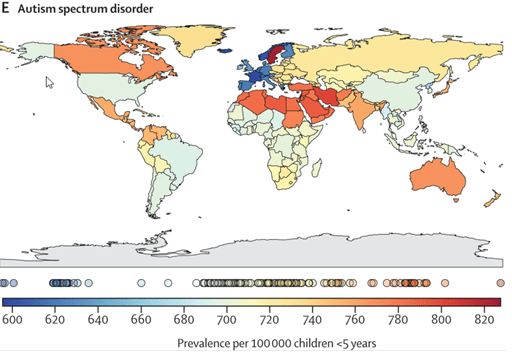
Since infants are the most affected by lead exposure, that might be a good place to start in asking a few questions. Here are a couple of incidence maps for autism and ADHD.
The rate of autism in Australia is about the same as Canada, and a bit more than India. Since this blog post is about lead, I can’t help pointing out that if a baby is exposed to a significant amount of lead, he or she can exhibit autism-like symptoms, and if you’ve read Nancy Hallaway’s e-book you’ll also have realised that at least some of the neurological symptoms can be resolved if the lead is removed.
Considering the opportunities there are for lead exposure in Australia, it would be fair to speculate that at least some of the cases of autism may be caused or contributed to by lead exposure. Something as simple as renovating an old house, sanding off the flaking paint while there are infants nearby, can result in lead poisoning and the symptoms of autism. Living in a lead-rich environment is another scenario where an infant could end up with sub-clinical levels of lead. I use the word sub-clinical because the “clinical” symptoms of lead poisoning are considered to be the ones we’ve known for more than the last century. Oh how this needs to be updated.
There are undoubtedly other causes of autism including genetics BUT one of the possible causes is lead exposure. Why would we not want to filter out those kids and maybe even treat them to reduce the severity of the symptoms? You know, the kids in the older suburb where a lot of houses are being renovated as older people move to retirement villages and younger families have moved in?
Even if the incidence of lead-induced autism was 5%, as an example, that means that 1 in 20 kids with autism could potentially be able to develop normally if they were diagnosed with lead poisoning and treated.
That of course raises two issues, the first that with the exception of children in the lead cities, Broken Hill, Port Pirie and Mt Isa, there is next to no paediatric testing of blood lead levels. And even if the blood lead levels are well above the notifiable limit, the only clinical treatment children will get is chelation therapy IF the blood lead level is above 45ug/dl. Children with non-toxic blood lead levels (less than 45ug/dl) are not treated to remove lead.
That’s a big deal when you think about it. Children with levels of lead known to have harmful neurological effects, do not have the lead removed because they have “sub-clinical” levels of blood lead.
That’s kind of depressing because it’s almost like there is no recognition that lead accumulates in the body. Lead poisoning is subtle, it can be the result of a brief and intense exposure which produces severe clinical symptoms, or something can happen after months and years of lower-level exposure when you’ve accumulated enough lead to produce chronic symptoms or damage to internal organs.
One of the additional challenges to getting treatment for children with sub-clinical levels of blood lead is a widespread belief in clinicians in Australia that chelation is high risk, that it isn’t effective, or that it’s more important to reduce exposure as much as possible.
I know I’ve done this to death already, but it is so WRONG that I need to keep hammering at these misconceptions until people realise that chelation should at least be tried.
The early use of chelation, more than 70 years ago, sometimes resulted in renal failure and death. By the 1960s it was known that the renal failure and subsequent deaths were due to trying to do things too quickly, too high a dose, too often. In fact, it has been found that at much lower doses, EDTA could actually reverse existing renal damage because it acts like an anti-oxidant. IV chelation with EDTA that follows now established protocols does not lead to renal damage or death provided those, safe protocols are followed.
A 5-year old autistic boy died of hypocalcemia during IV chelation therapy. I can’t argue that chelation didn’t kill him, but when I looked up the case, which I thought was due to medical ignorance it turns the pharmacy supplying the EDTA for his chelation therapy prepared a solution of Na EDTA instead of the Ca Na EDTA that had been requested by his paediatrician. Na EDTA is used to treat hypercalcemia because it removes calcium from the blood. Ca Na EDTA is normally used to remove heavy metals like lead because it DOESN’T remove calcium from the body. The child died of hypocalcemia, which caused heart failure. That is an absolute tragedy, a child dying because they were given the wrong drug, the wrong form of EDTA.
But another tragedy has been the many children that maybe could have been helped, that weren’t because of the wide held “belief” that a child can die from chelation therapy because of this incident.
Ca Na EDTA does bind other heavy metals besides lead, like arsenic, cadmium and mercury. As I’ve said before, that’s a bonus, but it also binds zinc and magnesium, which are essential metals. One of the important adjuncts to chelation therapy is trace metal supplementation.
It’s worth mentioning that another use for Na EDTA, beside treating hypercalcemia, is to remove calcium plaques (atherosclerosis). It works quite effectively, though it has to be accompanied post-treatment with trace metals plus calcium. A sad example of chelation therapy being badly understood is that the California Medical board banned the use of Ca Na EDT because it was ineffective at treating atherosclerosis (removing calcium).
Administered with appropriate protocols and caution, IV chelation therapy has been proven to be safe. If it was so dangerous, why do they use IV chelation therapy on children with severe (over 45ug/dl and encephalopathy) lead poisoning? And use an oral chelator if encephalopathy isn’t apparent.
Another argument against chelation therapy is that it isn’t effective because blood lead levels “rebound” after chelation.
When lead is absorbed, most of it ends up in the bones. This varies from about 75% in children to 95% in adults. The lead in bones is in balance with lead in the blood and soft tissues. When a chelator is administered, it binds the easily accessible lead in the blood and soft tissues. If the chelation therapy doesn’t go on for long enough (most treatments are for 5 days) then very little bone lead is removed. Once chelation stops, a new balance between bone lead and blood/soft tissue lead is established, and blood lead levels go back up to a level that reflects bone and body lead levels. A rebound simply means you didn’t remove all the bone lead, not that chelation doesn’t work.
I’d like to quote the first sentence of the acknowledgemnt in the book “Brush with Death” by Chritian Warren:
Writing acknowledgements is similar to receiving treatment for lead absorption: a single course of therapy is supposed to abate a burden that had accumulated over many years. The patient feels better, some of the burden is lifted, but the bulk remains forever bound up in the bone.
Removing bone lead is a case of slow and steady lead removal, with a dose of chelator that is low enough to be absolutely safe, over many months until ALL the lead is gone.
I’m not going to argue that reducing exposure isn’t critically important, because it is. Successful campaigns to reduce lead exposure, for example in Broken Hill, have absolutely resulted in a lower mean blood lead level in children. It would be wonderful if exposure could be reduced to zero, but that’s pretty unlikely. The basic problem with relying solely on the prevention of lead exposure is that there are so many possible sources of lead, that it will at best only ever be a partial solution. Whatever lead is absorbed, will increase the body lead burden, and increase the risk of disease.
The lead that has been absorbed, that is stored in bone, is going to be there, and will keep increasing, unless we can do something about removing it. Diet can play a significant role is reducing absorption of lead, some food ingredients like citric acid are weak chelators, so in the absence of lead exposure, an appropriate diet could gradually reduce body lead levels. But if you want to remove lead in something less than decades, using a chelator that is reasonably specific for lead is a pretty good move.
I’ve talked about this before, but I think this is the right place to bring it up again. Cattle in far North Queensland graze on land that has naturally occurring lead deposits (not due to pollution from mining/smelting) and they have high enough lead levels that they have (recently) been found to be unfit for consumption. Some smarter than average station owners use a chelation agent which is used to remove heavy metals from flue gases, TMT 15, to remove lead from the cattle, and make them fit for consumption. TMT has such a high affinity for lead that it can remove all the lead from the cattle in a few weeks. I wouldn’t use TMT 15 on humans because it hasn’t been tested on humans as far as I know, but if we can remove lead from the cattle we eat, why can’t we remove lead from our children, and ourselves.
Whilst Australia continues to be a world leader in lead mining, smelting, and processing, the adverse impacts associated with production have been consistently downplayed by industry, governments, councils, health officials, and regulators. Even some academics argue the effects of low lead exposures are not of significant concern. Due to ignorance, misinformation, and deliberate obfuscation of evidence, generations of families living next to lead-mining, smelting, and refining centres such as those in Broken Hill, Port Pirie, and Mount Isa, have been and continue to be exposed to environmental lead, a known neuro-toxic contaminant.
More than a century of IQ-lowering poisoning continues
Childhood exposure to lead has been linked to lower IQ and academic achievement, and to a range of socio-behavioural problems such as attention deficit hyperactivity disorder (ADHD), learning difficulties, oppositional/conduct disorders, and delinquency. The disabling mental health issues from lead exposure often persist into adolescence and adulthood.
There’s a lot more and I would encourage you to read the whole article. While Mt Isa has only had a lead smelter for a bit over 90 years, it is unlikely that there has been any less lead pollution, except perhaps in the last 15-20 years.
I guess the point I’ve drawn from the Port Pirie example is pretty obvious in the title in the Conversation article, ”a long history of looking the other way“. That’s what Queensland Health (QH) have been doing for at least the last decade, possibly longer. I don’t mean the whole organization because I know there are people in QH that are deeply concerned about lead in children, but apparently not the bureaucrats.
I am pleased to have found out there is serendipitous testing of blood lead levels in children in Mt Isa. When blood sample are taken from children in the Mt Isa hospital, any excess blood in the sample is tested for lead. If high (greater than 45ug/dl) levels of blood lead are detected in children , they are treated to remove excess lead. Lower levels of blood lead result in activities to minimise lead exposure, but no treatment to remove lead. This is despite a huge amount of clinical and epidemiological data that blood lead levels as low as 5-10 ug/dl can have serious neurological consequences.
There is voluntary testing available for adults in Mt Isa (and children, though infrequently). In adults, anything under 75ug/dl is again untreated, despite evidence (some shown below) that blood lead levels over 5-10ug/dl can increase the risk of death due to cardiovascular disease.
The next incidence chart shows something even more disturbing about Australian children.
As you can see on the world map, Australia is in a class of it’s own when it comes to ADHD incidence. The causes of this disproportionately high rate of ADHD are probably due to a lot of things, like still using insecticides, fungicides and other chemicals banned in most other non-third world counties. One of the causes could be toxic metals which are far more prevalent than we realise.
ADHD is attention deficit hyperactivity disorder. It’s a neurodevelopmental condition that is characterized by developmentally inappropriate levels of inattention, impulsivity, and hyperactivity that can cause a persistent pattern of inattention and/or hyperactivity-impulsivity that interferes with functioning or development.
For a long time, clinicians thought you grew out of ADHD, but it turns out that isn’t the case because while many adults and young adults with ADHD have compensated to live fairly “normal” lives for some it has resulted in severe functional, social or occupational impairment.
We have no idea why Australia leads the world in ADHD incidence, but I do know one possible contributing cause, lead. Just like the scenario where lead exposure can cause something that looks like autism, it can also cause symptoms of ADHD. But do we test for lead exposure if ADHD is suspected?
In Australia, we treat ADHD with drugs. The psychostimulant medications mainly used to treat ADHD are dexamfetamine, Ritalin and lisdexamfetamine. These drugs have a bucket-load of potentially severe side-affects like psychoses, mood swings and even seizures, so there is significant risk involved. They also need to be taken long-term as they are not a cure.
IF some of the cases of infant ADHD are caused by lead, and removal of the lead provided a permanent cure, that would be worth doing. Why don’t we measure blood lead levels to find out, and is chelation really more risky than psychoactive drugswhere we have no idea of the other possible consequences?
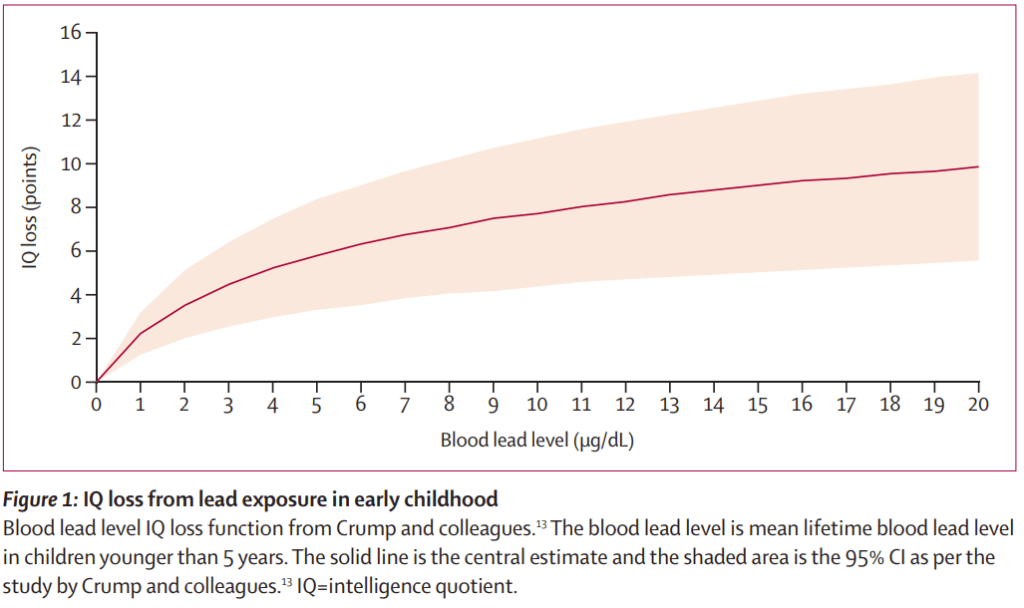
How about the other not so obvious effects of lead on infants, like a drop in IQ? I’ve shown the graph of IQ loss vs blood lead levels in an earlier blog, but here it is again (from the Lancet):
It’s hard to be more eloquent than the following article in the American Journal of Pediatric Health. I’d like to quote the complete article because it’s short and so well worth reading.
Lead Poisoning in the 21st Century: The Silent Epidemic Continues
Creating a disturbing sense of deja vu and in line with current trends of science denial, some skeptics are seeking to minimize the Flint,Michigan, water crisis and thus impede efforts to mitigate this humanmade disaster and prevent similar crises. They argue that the rise in Flint children’s blood lead levels did not warrant a state of emergency and that Flint’s kids were not poisoned. They are wrong. We represent three generations of pediatricians and child health researchers. In our professional lifetimes, we have seen repeated reductions in the levels of lead considered toxic as new research has shown time and again that blood lead levels previously considered safe are in fact harmful to children’s health. With each of these reductions, we have battled waves of skepticism from well-meaning academicians, the inertia of government agencies, and nefarious attempts by industry and their agents to undermine the science and to dismiss the increasingly clear evidence of lead’s toxic effects at ever lower levels. The science is now unequivocal. There is no acceptable level of lead. There is no safe threshold. Lead is pernicious at the lowest increments of exposure. The World Health Organization and the Centers for Disease Control and Prevention have declared that no level of lead in blood is safe. Driven by austerity and a corrosion of democracy, Flint’s public health disaster resulted in population-wide lead contamination of drinking water. In many homes it was categorized as hazardous waste. Not surprisingly, people interpret ingesting a poison as being poisoned. This definition of poisoning may not be equivalent to the toxicologist’s definition of acute poisoning, but it is poisoning and its consequences can be lifelong. This semantic nit-picking is counterproductive. There should be no disconnect between doctors who treat individual patients and public health practitioners who look at population-wide data and implications. Today, children rarely come to our emergency departments and intensive care units with symptoms of acute lead intoxication—seizing and being comatose—as they often did in generations past. However, this does not equate to no harm done. The impact of lead is insidious and often referred to as a “silent epidemic.” The effects of lead poisoning are not usually detected in a short visit with a doctor. The population impacts are, however, staggering. The consequences are one or two more kids in each classroom with symptoms of attention deficit hyperactivity disorder, 10 or 15 more kids in each school in special education programs, and fewer kids who are truly gifted. A five-point reduction in average IQ caused by widespread exposure to lead will result in a 50% increase in the number of children with IQ scores below 70 and a 50% decrease in the number with IQs higher than 130. In adults, lead exposure results in cardiovascular and kidney problems. And some studies have shown that children exposed to lead are at increased risk for school failure, unemployment, and incarceration. Now more than ever, it’s time to renew and refocus efforts to ensure that the blood of children in cities such as Flint; Detroit, Michigan; Chicago, Illinois; Baltimore, Maryland; Newark, New Jersey; Philadelphia, Pennsylvania; and beyond are never used as detectors of environmental contamination. Specifically, this means a renewed effort to update outdated action levels, remediate homes, replace lead pipes, and eliminate all the other sources of lead in our environment before our children are poisoned. That is the legacy we hope to leave the next generation.
Australia may not have a Flint Michigan where incompetent officialdom stupidly poisoned much of a small city with lead because of lead leaching out of lead pipes, but we do have areas of cities that have high levels of lead, either as a result of leaded petrol, or environmental lead, or lead pollution from the mining, smelting and transport of lead.
And we have a lot of government agencies that are pretty busy ignoring the true cost of ignoring lead poisoning. And there was the situation in Yarrabah where a broken-down pH adjuster allowed acidic bore water to leach lead out of brass fittings and lead soldered pipes. When various news services had headlines about lead poisoning in Yarrabah, the Health Minister went there to announce funding for a new pH adjuster. That was one year after the request for funding for a replacement, but it’s pretty obvious that in the absence of politically damaging news stories, it’s easier to ignore any problems.
Thanks to lead paint and a host of other sources of lead, I can state with absolute certainty that some children in Australia will be adveresely affected by lead and have their futures blighted. Let’s make a guess about how many.
There are roughly 1.5 million children aged under 4 years in Australia who are exquisitely sensitive to lead, 2.2 million between 5 and 12 and 1.4 million between 13 to 17. The US has the added risk of lead pipes in older houses, so statistics of 1 in 6 children affected by lead quoted by the CDC may possibly overestimate the number of children affected in Australia. But even if 1 in 20 children are affected by lead in Australia, that equates to about 250,000 children in Australia that are potentially affected by lead. It’s anyone’s guess if this is the case because we just don’t know thanks to the lack of testing. Talk about looking the other way!
We have all the rest of the sources of lead exposure that are seen in the USA. But there is a big difference in one area. With the possible exception of Broken Hill, there is little evidence that any government agencies are taking any active steps to drastically reduce lead exposure. It’s notable that in Broken Hill the lead exposure reductions have largely been due to local community action.
I guess it’s now time to focus on adults.
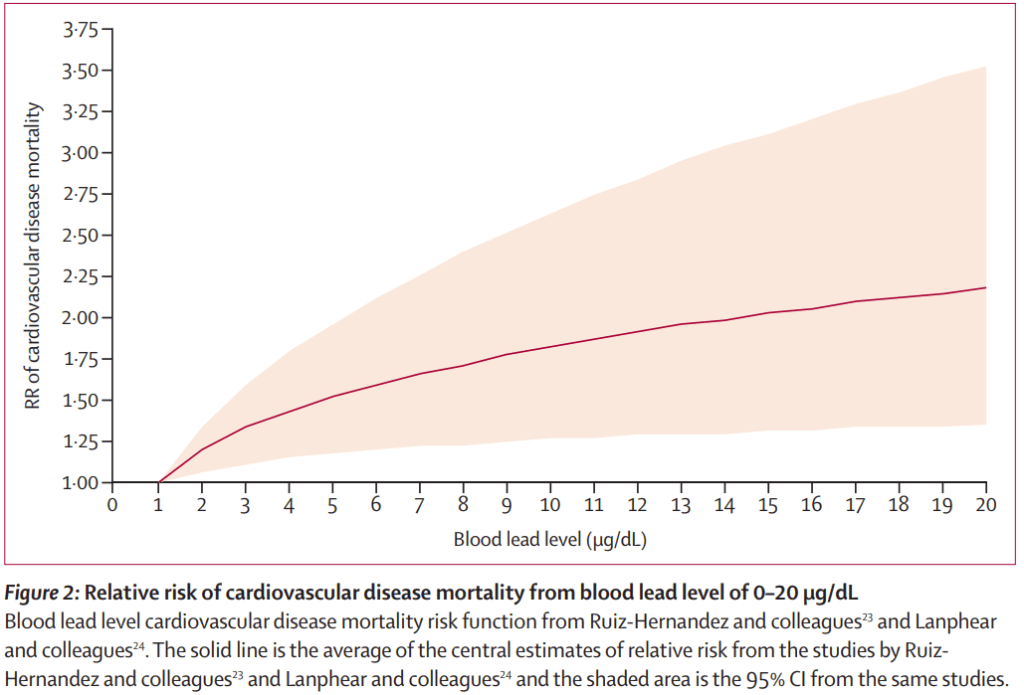
Let’s start with another graph posted earlier from the Lancet. This is cardiovascular death risks versus blood lead levels.
Notice that anything over 1 ug/dl results in an increase in the risk of death from cardiovascular disease, whether it’s atherosclerosis, peripheral vascular disease, high blood pressure causing strokes and so on.
Long term studies of the health of lead risk workers in Australia has found alarming increases in the incidence of various cancers in workers exposed to lead. As for the general population, we don’t know because just about the only people that get tested for lead are people whose occupation exposes them to lead.
If we don’t test for lead in the general population, then the authorities can also “safely” ignore the effects of lead on the general population. It doesn’t mean that people aren’t adversely affected by lead, but by not testing them, we simply don’t know. If our governments are unwilling to acknowledge the costs to our economy of doing nothing about lead, then we have a problem.
If we add up the health costs: the costs to the justice system, the loss of wages, the social costs of supporting lead-affected children, the reductions in productivity due to loss of IQ, and the economic costs of deaths caused by lead, the total amounts are enormous. And yet we (our government), continue to look the other way when it comes to lead. Are they so corrupt and influenced by lobby groups, or are they afraid to open the Pandora’s box of damage that lead inflicts on the community?
There’s really not that much more to say that hasn’t been said already. But it would be remiss of me not to point out that youth and adult violence and crime have been linked to lead exposure. The next time you hear about demands for more policing to reduce crime, maybe some blood lead testing could reveal a problem that might have a solution other than more youth detention centres.